
Eyelid surgery, also called blepharoplasty, removes or repositions excess skin and, when appropriate, muscle or fat around the eyelids. It may be performed for cosmetic reasons, while severe upper-lid skin excess may also cause functional symptoms by restricting the upper or outer field of vision.
A careful assessment comes first. A heavy or tired appearance is not always caused by excess eyelid skin. A low brow, true eyelid drooping (ptosis), dry eye or another eye condition may require a different approach.
Key takeaways
- Upper and lower blepharoplasty are different operations.
- An individual examination determines which option may be appropriate and safe.
- Swelling, bruising and temporary irritation are expected during early recovery.
- The result is not immediate, and perfect symmetry cannot be guaranteed.
- New severe eye pain, rapidly increasing swelling, double vision or reduced vision requires urgent medical attention.
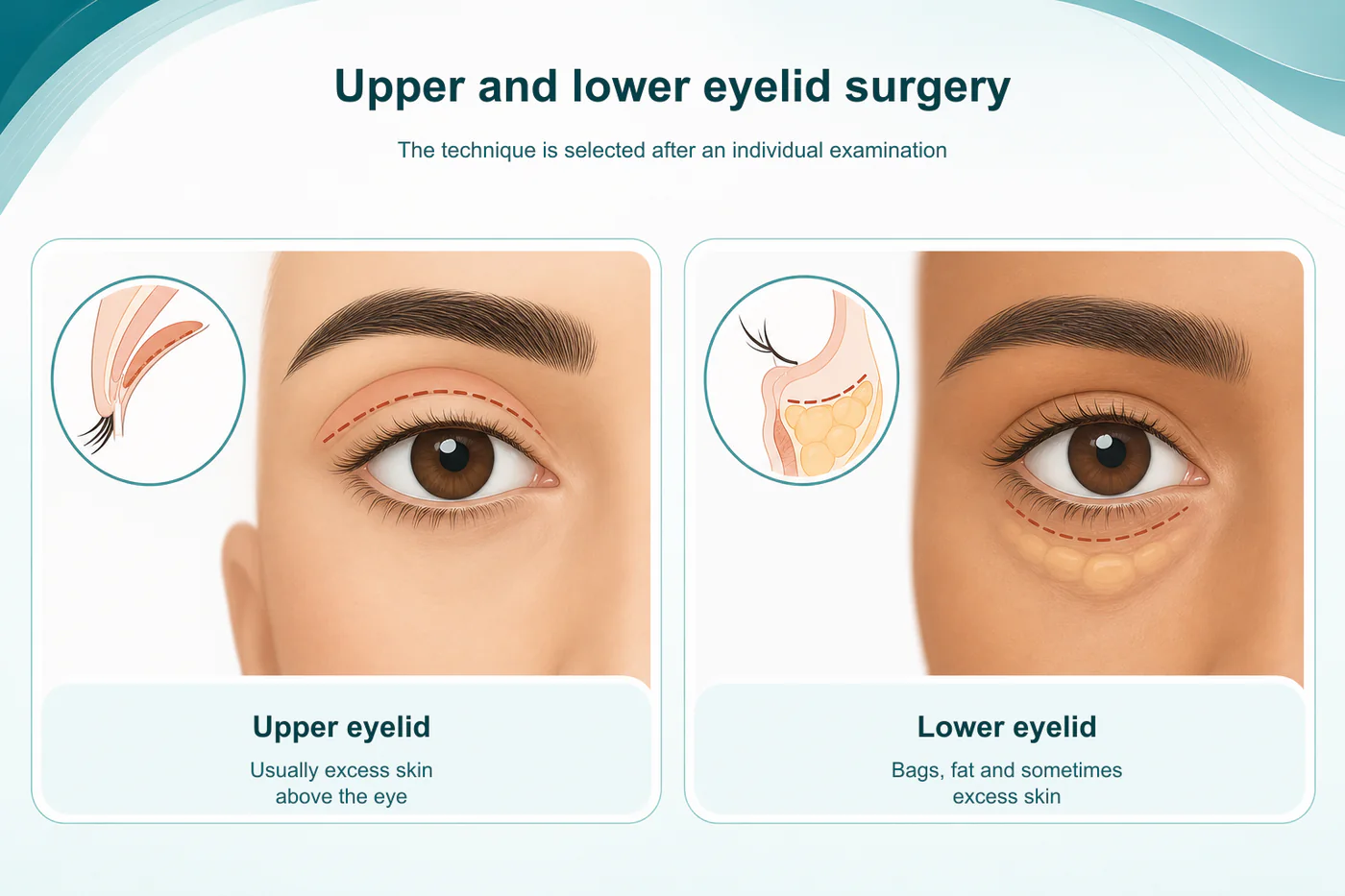
How do upper and lower eyelid surgery differ?
| Upper eyelid surgery | Lower eyelid surgery | |
|---|---|---|
| Common reason | Excess skin, a heavy appearance or restriction of the visual field | Under-eye bags, protruding fat and sometimes excess lower-lid skin |
| Usual approach | An incision placed in the natural eyelid crease | An incision below the lashes or on the inside of the lower lid |
| What may be adjusted? | Skin and, when appropriate, a limited amount of muscle or fat | Fat may be removed or repositioned; skin may also be adjusted |
| Important assessment | A low brow or ptosis may need a different or additional procedure | Lower-lid position and support must be assessed carefully |
The exact technique is personalised. The clinician examines the eyelids, brows, eye surface and facial proportions before recommending a plan.
When might eyelid surgery be considered?
A consultation may be useful if you:
- have upper-lid skin that feels heavy or hangs over the eyelid margin;
- have a reduced visual field because upper-lid skin partly obstructs your vision;
- are concerned about under-eye bags or excess lower-lid skin;
- have realistic expectations and understand that surgery aims for improvement, not perfection.
Blepharoplasty does not remove every type of dark circle, does not automatically lift a low brow and is not the same as ptosis surgery. The consultation should identify the true cause of your concern.
What should you discuss during the consultation?
Tell the clinician about:
- dry, burning or irritated eyes, glaucoma, eye allergies and previous eye surgery;
- thyroid disease, diabetes, circulation or wound-healing problems;
- every medicine, vitamin, herbal product and supplement you use;
- anticoagulants, antiplatelet medicines and anything else that may affect bleeding;
- smoking or nicotine use;
- your goals and what a natural result means to you.
Assessment may include eyelid measurements, brow and ptosis evaluation, examination of the eye surface or tear film, and clinical photographs. Visual-field testing may also be needed when function is affected.
Preparing safely
Never stop anticoagulants, aspirin or another prescribed medicine on your own. If a change is needed, the treating clinician should coordinate it with the clinician who prescribed the medicine. Herbal products and supplements can also affect bleeding and should be included in your medication list.
Smoking and nicotine can impair healing. Discuss the appropriate stop-smoking advice in good time. Arrange transport home and follow your individual instructions about food, drink, make-up, contact lenses and skincare.
What happens during the operation?
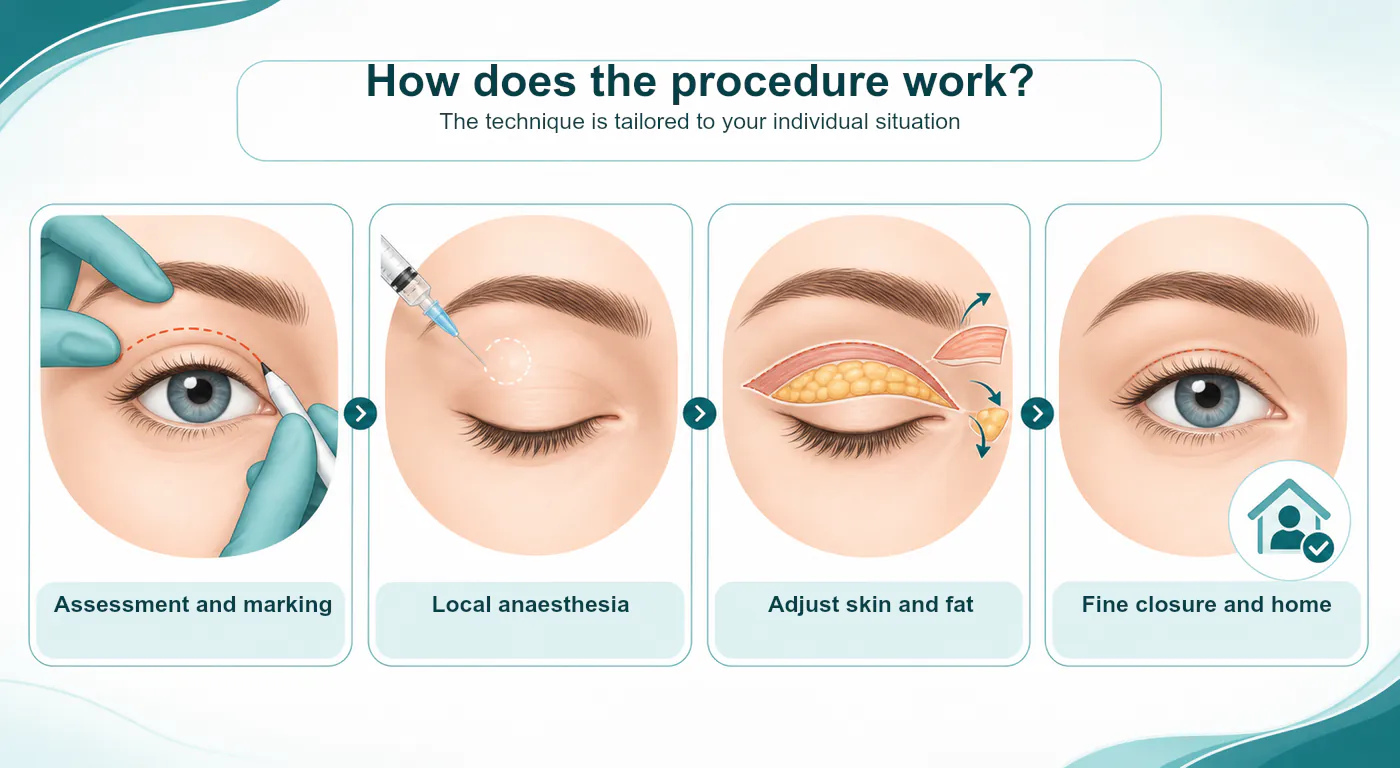
Upper blepharoplasty is often an outpatient procedure performed under local anaesthetic. Lower-eyelid surgery or combined procedures may require a different anaesthetic plan. The duration depends on the number of eyelids treated and the technique selected.
For an upper blepharoplasty, the incision is usually placed in the natural eyelid crease. A lower-lid procedure may use an incision just below the lashes or inside the eyelid. Most patients can go home on the same day once the immediate check is satisfactory.
Recovery: what is usually expected?
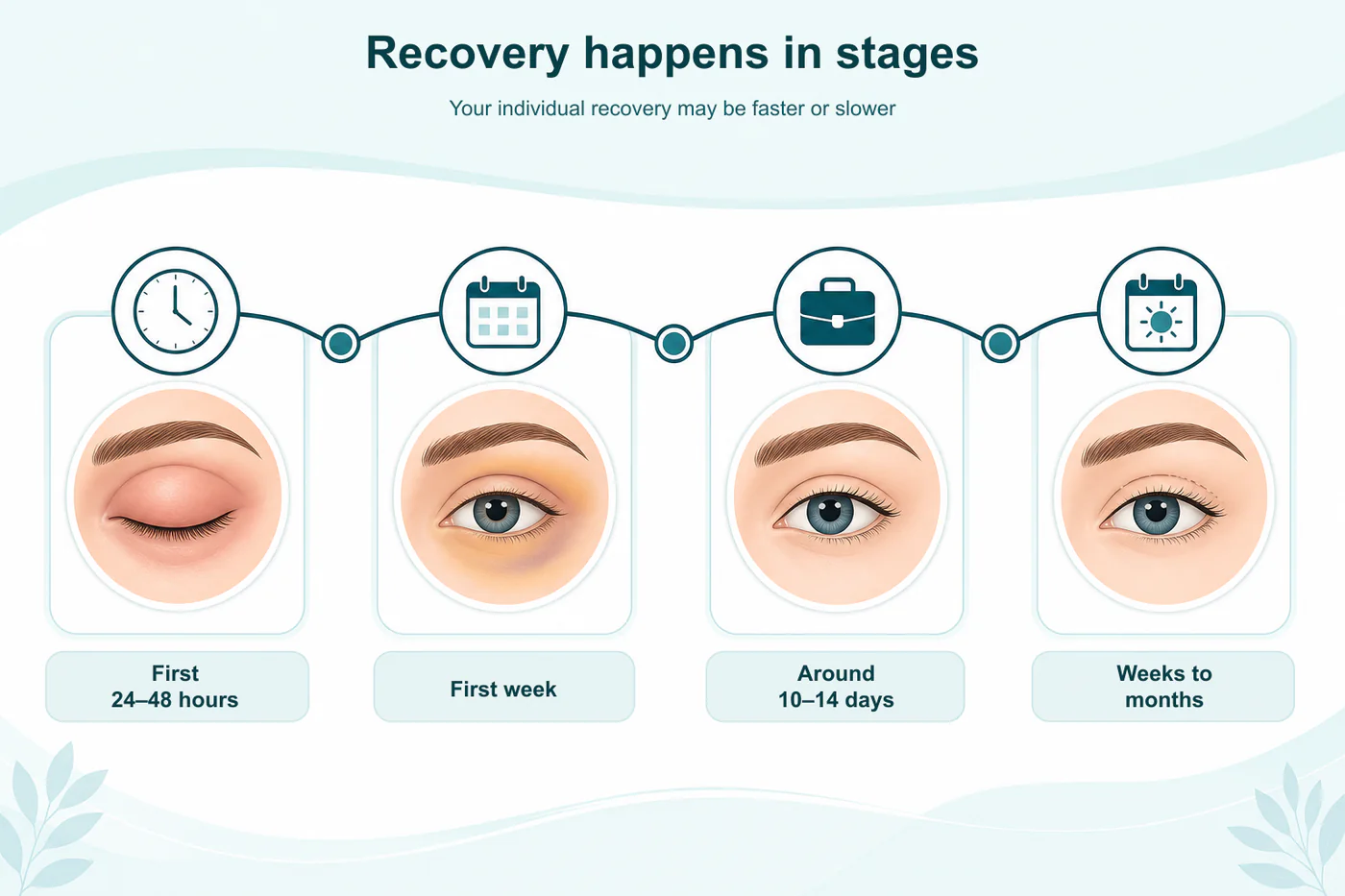
| Period | What you may notice | What to consider |
|---|---|---|
| First 24–48 hours | Swelling, bruising, tightness, watery or dry eyes and sometimes temporary blur from ointment | Rest, keep your head slightly elevated and use cooling or eye medication only as instructed |
| First week | Swelling and discolouration may remain visible | Do not rub your eyes; follow wound-care instructions and attend the scheduled review |
| Around 10–14 days | Bruising and swelling improve clearly for many people | Return to work depends on your recovery and type of work |
| Several weeks to months | Scars settle and the result takes shape gradually | Protect the area from sunlight and do not judge the final result too early |
Recovery varies. Instructions from your own treating clinician always take priority over general online advice.
Possible risks
Common temporary effects include swelling, bruising, tenderness, watery or dry eyes, altered eyelid sensation and temporary blurred vision caused by ointment.
Less common problems include infection, bleeding, noticeable scarring, asymmetry, under- or overcorrection, difficulty closing the eyes and persistent dryness. After lower-lid surgery, the lower eyelid may pull down or turn outwards. Additional treatment or revision surgery is sometimes required.
Bleeding inside the eye socket that puts pressure on the optic nerve is very rare, but it can threaten vision.
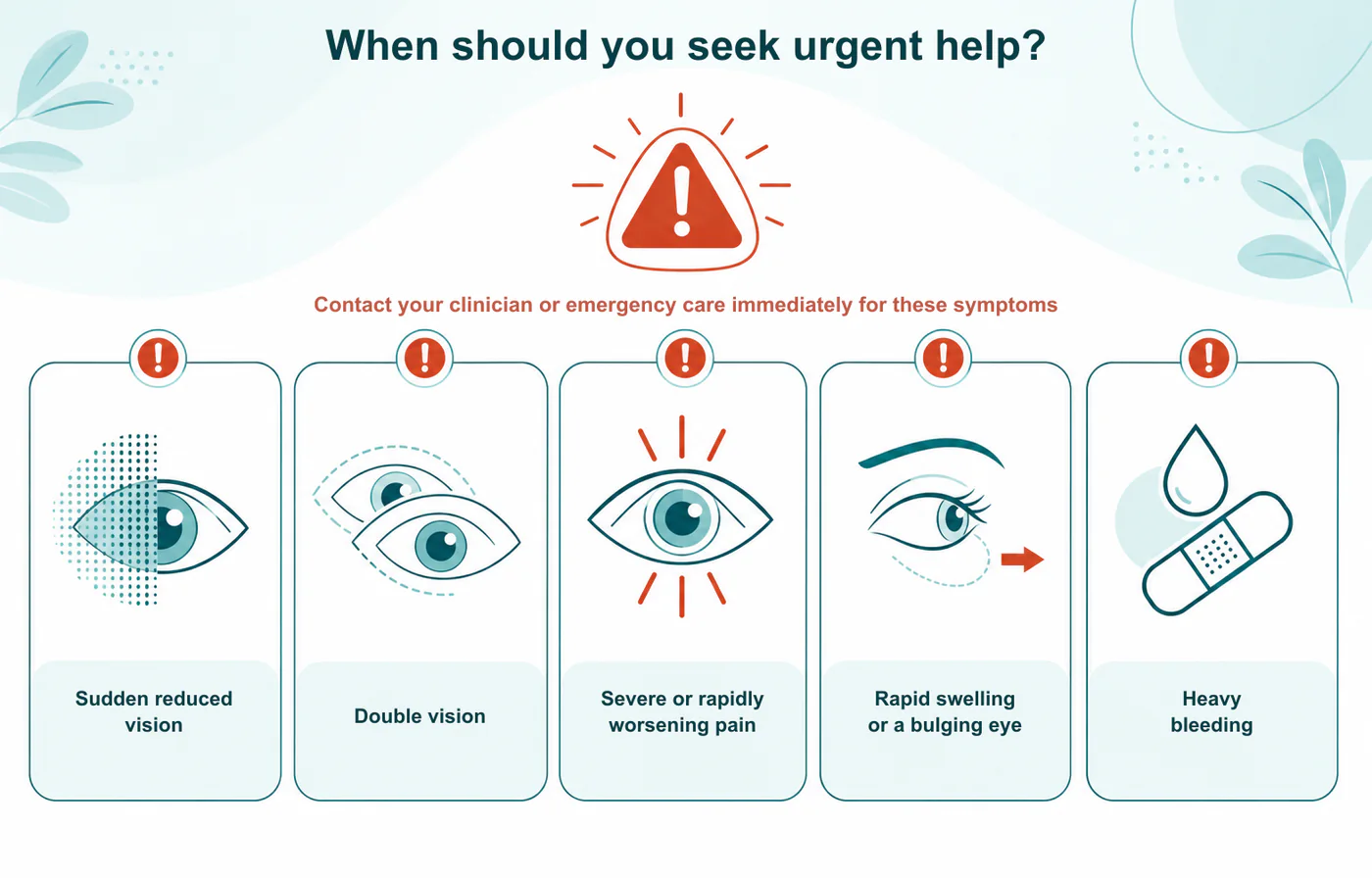
When should you seek urgent help?
Contact the treating clinician or emergency care immediately if you develop:
- sudden reduced vision or double vision;
- new, severe or rapidly worsening pain around the eye;
- rapidly increasing swelling, a bulging eye or heavy bleeding;
- increasing redness, heat, pus or fever;
- shortness of breath, chest pain or an unusual heartbeat.
What result can you expect?
The aim is a fresher, more rested appearance and, where upper-lid skin genuinely restricts the visual field, possible functional improvement. The early appearance is not the final result: swelling and scar tissue need time to settle. The result is generally assessed more reliably after several months.
Eyelids are not perfectly symmetrical before or after surgery. Natural ageing also continues. Results can be long-lasting, but no procedure can promise a lifelong result.
Is eyelid surgery covered by insurance?
Surgery performed only for cosmetic reasons is generally not covered by Dutch basic health insurance. Strict conditions apply to medically necessary upper-eyelid surgery, and prior authorisation may be required. Your current policy and your insurer’s assessment are decisive.
Frequently asked questions
Is blepharoplasty painful?
You should not feel sharp pain during surgery under local anaesthetic. Tenderness and tightness are more common afterwards than severe pain. Strong or increasing pain needs prompt medical assessment.
How much time should I take off work?
Many people plan for approximately one to two weeks before feeling comfortable in social or professional settings. Your work, the extent of surgery and your recovery determine when it is safe to return.
Will the scars remain visible?
Every incision creates a scar. On the upper eyelid, it is usually placed in the natural crease. Scars may be red or firm at first and generally settle gradually over the following months.
Does eyelid surgery also correct a low brow?
Not automatically. If the brow sits low, removing eyelid skin alone may give an incomplete result. The brow and eyelid should therefore be assessed together.
When can I wear contact lenses, make-up or exercise again?
This depends on the technique and wound healing. Follow your individual instructions and do not resume an activity while the wound remains irritated or insufficiently healed.
Might I need eyelid surgery again in the future?
Possibly. Surgery does not stop ageing or future changes in skin and supporting tissues. Concerns can return after several years.
Personal advice
Considering upper or lower eyelid surgery? During a consultation at F&A Medical Center, we discuss your goals, medical history, eye health, suitable options and risks so that you can make an informed decision.
This article provides general information and does not replace a personal medical examination or the aftercare instructions from your treating clinician.