Prominent ears are common. About one in twenty people has ears that sit noticeably further from the head than average. Medically, this is harmless: hearing is completely normal. Even so, it can weigh on a child or adult, especially when other people comment on it.
In prominent ear correction (otoplasty), the surgeon reshapes the ear cartilage so the ear sits closer to the head. This article explains when correction is possible, how the operation and recovery usually go, which risks are involved and when you should seek help straight away.
Key takeaways
- Prominent ears are an inborn shape of the ear cartilage and do not affect hearing.
- In newborn babies, a small splint held with tape in the first weeks can sometimes avoid surgery.
- Surgery is usually done from around six years of age, when the ear is close to its adult size.
- After the operation you first wear a firm head bandage, followed by a headband for several weeks.
- Sudden severe pain in one ear, blood coming through the bandage or a high fever needs urgent attention.
What causes prominent ears?
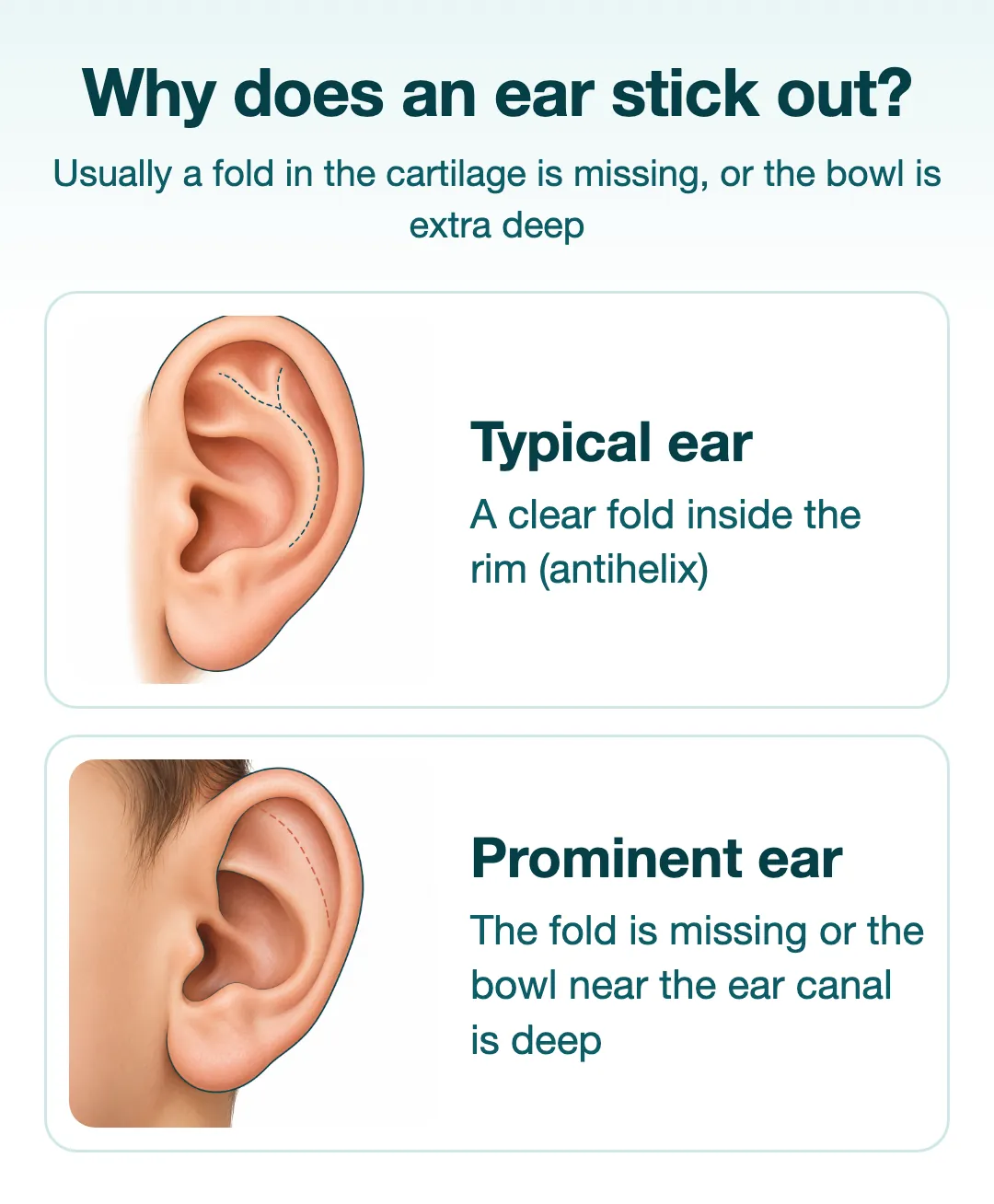
The outer ear is made of cartilage with a fixed pattern of folds and ridges. In prominent ears, part of the fold that normally runs just inside the rim of the ear, the antihelix, is usually missing. As a result, the ear bends back less. In other people, the bowl around the ear canal, the concha, is unusually deep and pushes the ear forward. Often it is a combination of both.
Prominent ears are present from birth and sometimes run in families. One or both ears can be affected, and the degree varies a lot from person to person.
Which treatment suits which age?
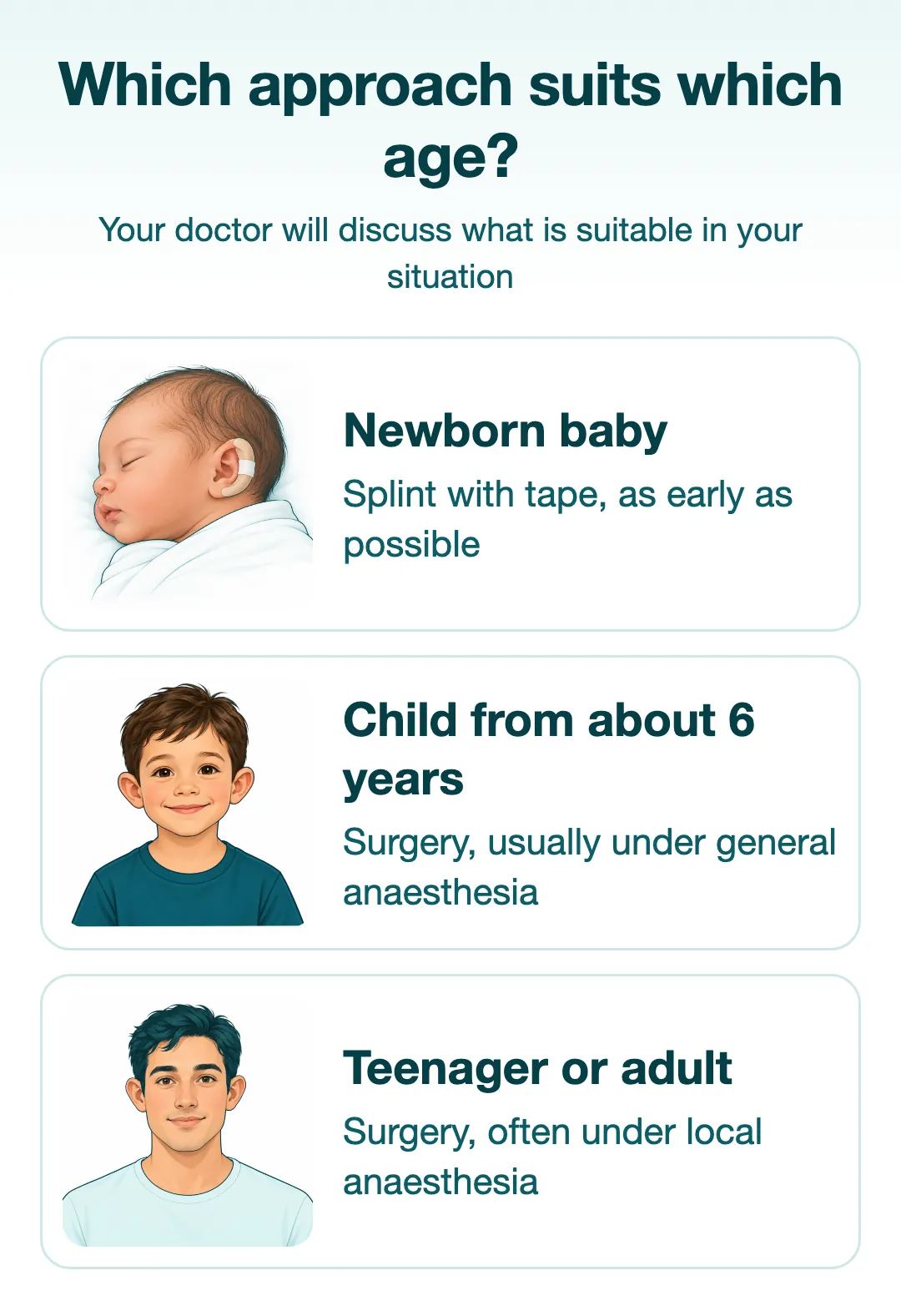
Age makes a real difference. In newborns, the cartilage is still very soft because of the mother’s hormones. In those first weeks, the ear can sometimes be guided into a better shape without surgery. After that, the cartilage firms up and a splint becomes much less effective.
- Newborn baby
A soft splint held on the ear with tape for several weeks. It works best when started as early as possible, ideally in the first weeks after birth. - Child from about 6 years
Ear correction surgery, usually as a day case under general anaesthesia. The ear is close to adult size, and the child can say whether they want the operation. - Teenager or adult
Ear correction surgery, often under local anaesthesia. Correction is still possible later in life, although the cartilage is firmer than in young children.
Do you notice that your newborn’s ear sticks out or has an unusual shape? Mention it early to your GP, the child health clinic or your maternity nurse. After the first months of life a splint usually no longer helps, and surgery is the only way to change the position of the ear permanently.
What is discussed at the consultation?
With children, one question matters more than most: does the child want this? A child who is bothered by their ears usually copes better with the bandage and headband than a child who is mainly going along with their parents’ wishes.
The consultation also covers:
- what exactly bothers you or your child about the ears, and what a natural result means to you
- previous operations, problems with wound healing, a tendency to bleed or noticeable scars
- all medicines, including blood thinners, painkillers and supplements
- the shape and firmness of the cartilage, and the differences between the left and right ear.
Never stop blood thinners or other prescribed medicines on your own. If needed, your clinician will discuss with the prescribing doctor whether a medicine should be adjusted for a while.
How is the operation done?
The surgeon usually makes a small cut in the skin crease behind the ear. Through this opening, the cartilage is shaped into a new fold and held with stitches. Sometimes the cartilage is first made a little more flexible, or a small piece is removed from the bowl near the ear canal. The right technique depends on the shape and firmness of your ear. The skin is often closed with dissolvable stitches.
The operation usually takes one to two hours. Young children are generally treated under general anaesthesia. Older children and adults can often have the procedure under local anaesthesia. In most cases you can go home the same day.
Recovery: what is usually normal?
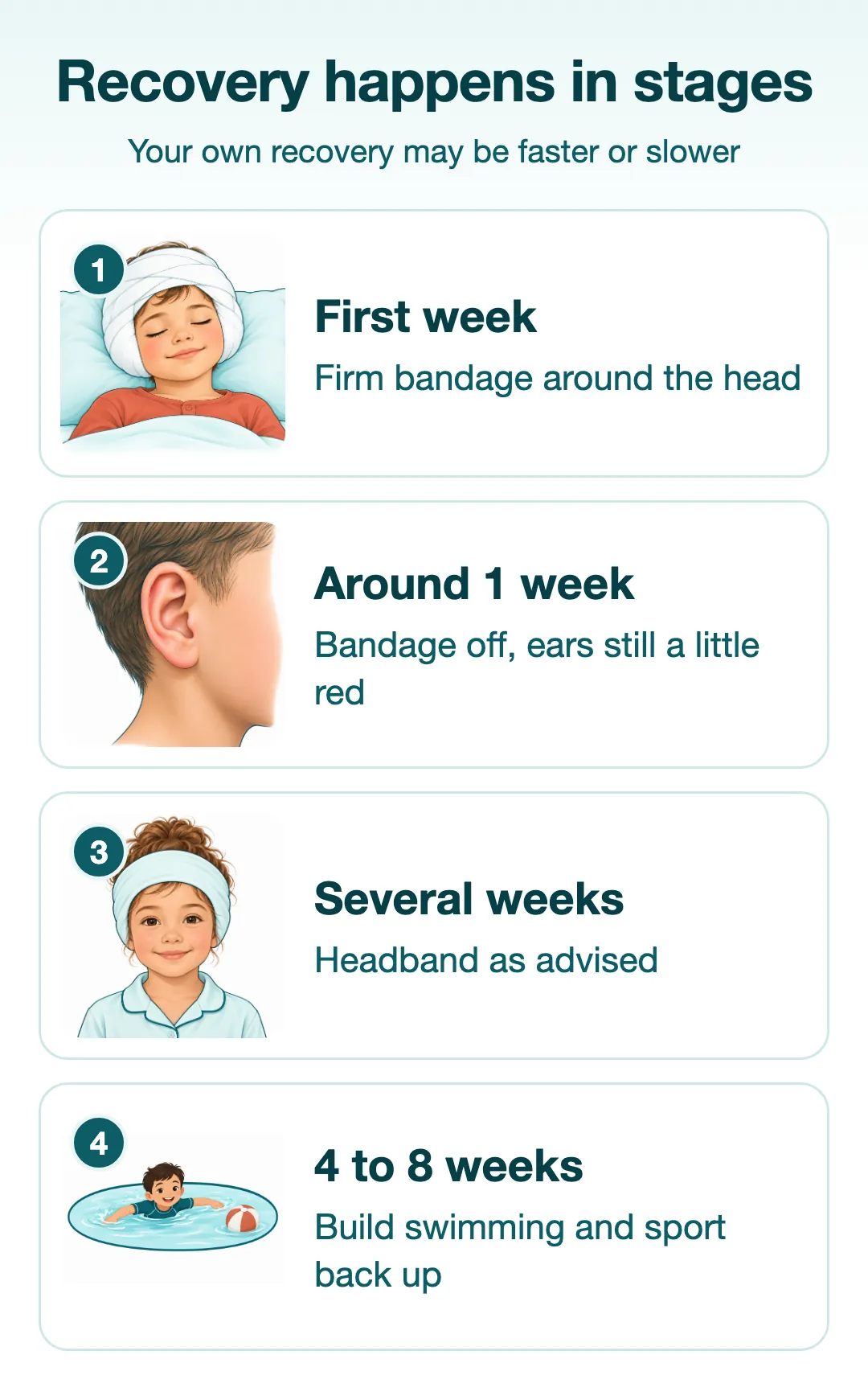
After the operation, a firm bandage is wrapped around the head. It protects the ears and holds them in their new position.
- First few days
Swollen, tender ears, often with a throbbing or pressing feeling. Rest, take pain relief as advised and keep the bandage dry. - Around 1 week
The bandage comes off. The ears are still red, swollen and sometimes bruised. Leave them alone (no pulling or scratching) and attend the planned check-up. - The following weeks
Swelling gradually settles and the ears may feel stiff or a little numb. Wear the headband as agreed, often day and night or only at night. - 4 to 8 weeks
The ear feels more and more normal. Build swimming and sport back up, with contact sports usually last.
Children often return to school after one to two weeks. Sensation in the ears can feel different for weeks to months, and the ears are often extra sensitive to cold at first. Your own recovery may be faster or slower. The instructions of your own clinician always come first.
Possible risks
Almost everyone has temporary swelling, tender ears, numbness or tingling and sometimes bruising after the operation. There will be a scar behind each ear, usually well hidden in the skin crease.
Less often, the following can happen:
- The ear sticks out again to some degree. Cartilage has a memory and can partly spring back. In studies, a second correction was needed in about 2 to 5 in 100 people.
- A collection of blood under the skin (haematoma). This happens after about 1 to 4 in 100 operations, usually in the first days. The blood often needs to be removed quickly.
- A stitch working its way through the skin. This can usually be dealt with easily.
- A difference between the two ears. Ears are never exactly the same by nature, so nobody can promise perfect symmetry.
- Infection, sometimes of the cartilage itself. This needs prompt treatment.
- A thick or raised scar, especially in people who are prone to this.
When should you seek help straight away?
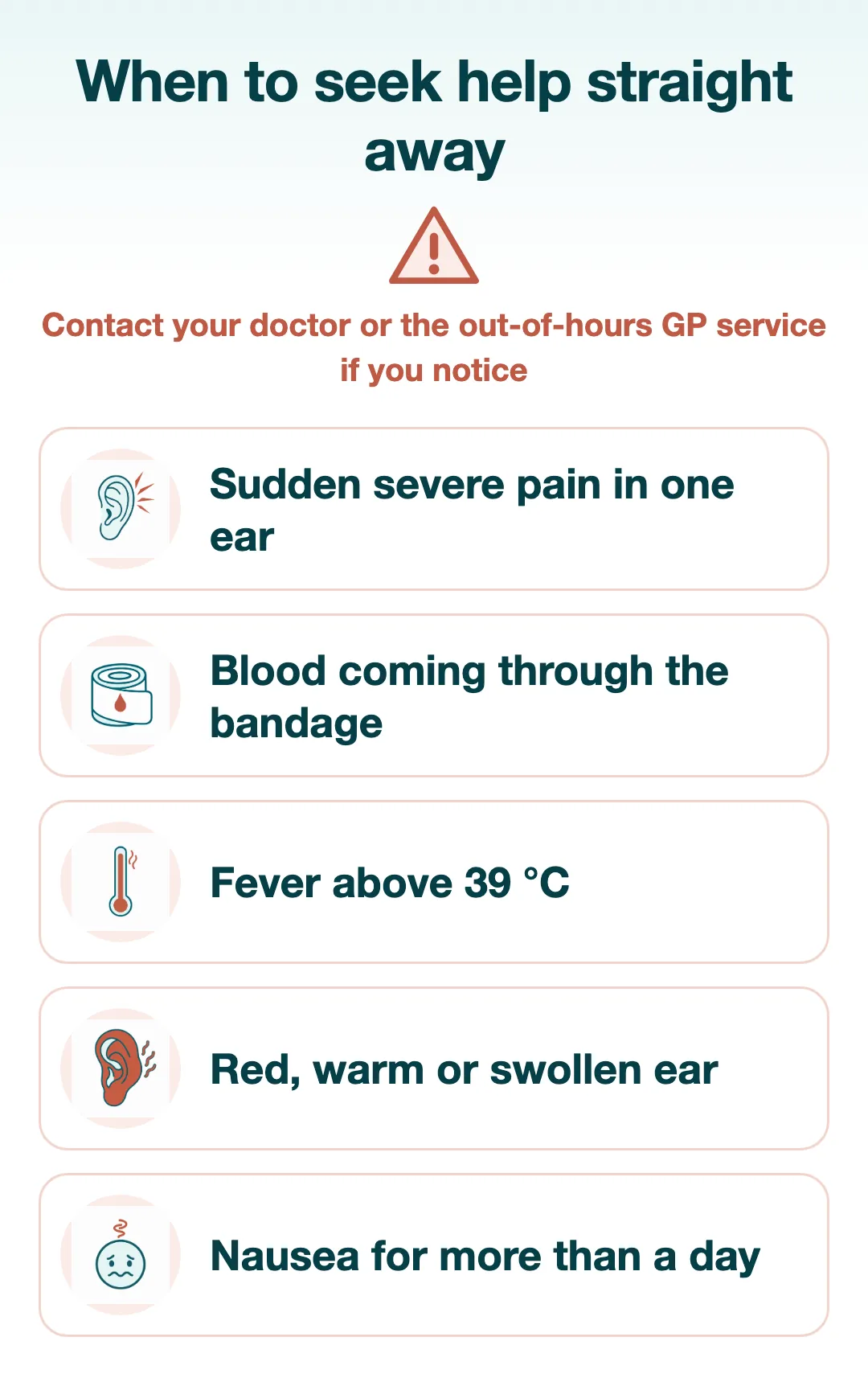
Contact the treating doctor straight away, or the out-of-hours GP service (huisartsenpost) outside office hours, if there is:
- sudden severe or steadily worsening pain, especially in one ear
- blood coming through the bandage
- a fever above 39 °C
- an ear that becomes increasingly red, warm or swollen, or pus
- nausea that lasts longer than a day.
Severe pain on one side can mean the bandage is too tight or that a haematoma has formed. Do not wait for the next check-up.
What result can you expect?
The aim is an ear that sits closer to the head and looks natural, not an ear pressed flat against the skull. Straight after surgery the ears are swollen. The final result can only be judged properly after a few months.
For most people the new position holds well. Still, the cartilage can partly spring back, and small differences between the ears are normal. That is why no surgeon can promise a perfect result or one that is guaranteed for life.
Is ear correction covered by insurance?
According to Zorginstituut Nederland, prominent ear correction is covered by Dutch basic health insurance only in exceptional cases. Many supplementary insurance policies do cover all or part of the cost, usually only for children and young people up to 18. You often need approval in advance. Conditions vary widely between insurers and policies, so always check your own policy before you book.
Frequently asked questions
Is ear correction painful?
During the operation, the anaesthetic means you feel no pain. Afterwards the ears are mainly tender and feel under pressure, which ordinary painkillers usually keep manageable. Pain that suddenly gets worse is a reason to call straight away.
Can it be done without surgery?
Only in newborn babies, with a splint in the first weeks. In older children and adults the cartilage is too firm. For them, there is no proven non-surgical method that permanently changes the position of the ear.
Am I too old for ear correction as an adult?
No. Adults can also have their ears corrected, often under local anaesthesia. The cartilage is firmer, which the surgeon takes into account when choosing the technique.
How long will my child need to stay home?
Many children go back to school after one to two weeks. PE, swimming and rough play usually wait a few weeks longer. Your clinician will tell you what applies to your child.
Does the operation affect hearing?
No. The operation is on the outer ear, not on the ear canal or the inner ear.
Will people be able to tell my ears were operated on?
The scar usually lies behind the ear, in the natural crease, and cannot be seen from the front. It may stay red for the first months and generally becomes less noticeable after that.
Personal advice
Not sure whether ear correction is right for you or your child? During a consultation at F&A Medical Center, we look at the ears together and talk through your wishes, the options and the risks. You can read more about the treatment on our ear correction page. To make an appointment, please use our contact page.
This information is general and does not replace a personal medical examination or the aftercare instructions of your clinician.